Thursday, April 19, 2012

Eight Lessons I Learned From My Zone 10a Garden


Jewel Nasturtiums 

1 - Planting Petunias and Nasturtiums in among the tomatoes adds to the visual pleasure of the veggie garden. Nasturtiums are reported to deter nematodes, but the jury is out on that one. An added bonus is that they both give off a heavenly scent in the evening. A report by the USDA says that ordinary sugar sprinkled on the garden has a drying effect on nematodes (either that or the sugar high kills them).


Broccoli in the ground
Potted Broccoli


2 - Broccoli (Packman variety in my case) prefers to be grown in the ground, on a slight mound, with plenty of compost dug in and commercial weed block underneath the leaves. For years I have grown Broccoli in pots and have been happy with the results. Check out the size of the leaves of the potted example, compared to the foliage of the plants in the ground. I have noticed that potted Broccoli rapidly assimilates its potting compound into itself, thereby causing the medium to shrink and diminish. They have deep roots and will go through the pots and anchor into the soil below. You might wonder why I grew Broccoli in pots to begin with? My dogs just love to roll around in the vegetable garden!


CD hanging
3 - We love the birds visiting our garden, especially when they bring their fledgelings with them. What I don't love is a tiny peck hole in every single tomato. Solution? Hang old CD's nearby. Oh, and then fill up the feeders - we don't want them going hungry! 


An added bonus is the attractive, sparkly and reflective 'winks' from the CD's surface. 


Woodpecker in Feeder


4 - Despite my best (and continued) efforts, I cannot grow cucumbers, zucchini or summer squash to fruition. They develop powdery mildew and just dissolve into a mush. I have tried most natural remedies out there. The boys don't care for squashes anyway.


5 - If your Eggplant develops a whitefly infestation, try Diatomaceous (Dya-tom-a-cee-us) Earth. Take a paintbrush and just lightly brush the underside of leaves. Problem solved. You will have to reapply after it rains. I picked up a big bag of DE from a local feed store. DE dusted on your garden also helps to eliminate fleas, lice and cockroaches. It interferes with their protective shell and desiccates them. Do not inhale the dust.
Where does Diatomaceous Earth come from? Click Here for Wiki info.


6 - If tomato or pepper fruit production comes to a grinding halt, try watering with a solution of Epsom Salts, and IF the plants has plenty of green leaves hold off on the nitrogen. If the fruit however is too small that's the time to add nitrogen. Nitrogen rich add-ins include: coffee and tea grounds and fish emulsion.


7 - There is no substitute for your own compost. It is truly amazing how quickly all those vegetable scraps break down into the 'gold' standard of soil! I have 3 bins throughout the garden. 1) For large item like broccoli that has gone to seed 2) For kitchen scraps, eggshells, tea bags, coffee grounds etc. 3) For potting soil that has been 'recycled' from out of season vegetables or annuals.


White Periwinkles
8 - With daytime temperatures now stretching into the 80F, Bizzy Lizzies (Impatiens), Marigolds and Pansies are pretty much done. Rather than coddle them along (with vast amounts of water) I have moved on. Periwinkles are thriving and look good either in a pot or as a border item. They need very little water to survive. Only thing about Vincas is they will reseed like crazy and pop up everywhere! Nasturtiums, and Petunias are still thriving, although they have to be shaded from the afternoon sun, not so with Portulaca which loves the heat. Coleus and Dianthus are also looking good in the garden.


Fading Away - Impatiens


What is a Zone Anyway? Click here to find your USA Zone


Thursday, April 12, 2012

Lemon Boy Tomato - My Favorite 2 Years Running

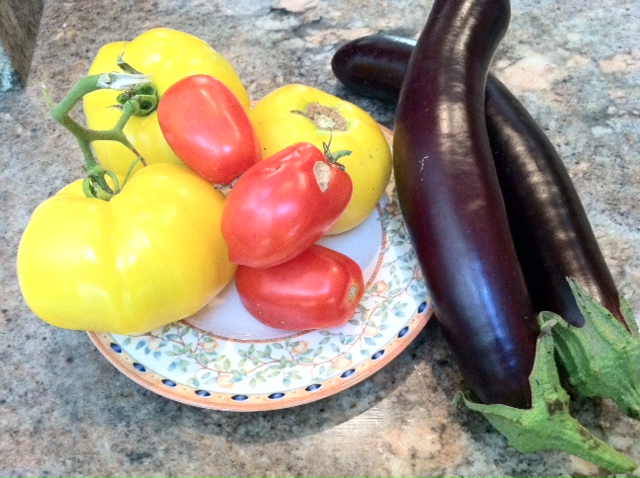
The Lemon Boy variety of tomato is a hands down winner again in my Zone 10 garden in South Florida!

Its flavorful, juicy fruit (that get as big as baseballs) and durability easily surpasses most tomato varieties I have personally grown.
Lemon Boy - compare size to the Red Roma!
I first became acquainted with this bright yellow tomato in 2011. I harvested my own seeds from the juiciest tomatoes during the growing season of 2011 and picked and harvested the seeds of the very last tomatoes during July. My intention is to cultivate a heat tolerant tomato that will perhaps last into August or even September. This is quite a tall order, since the temperatures here in South Florida are in the 90’s every day during May to September. In addition last year we had considerably less rainfall than usual, so the vegetables in the garden had to tolerate being watered with our well water (full of iron and sediments).


Fast forward growing season 2012. I started the seeds in potting soil during November 2011 when the temperatures were 75F during the day and 70F’s at night. In December the growth of the seedlings accelerated in leaps and bounds and when they reached 10” tall I set some out in very large pots and some in the Florida sandy, garden soil (which I had greatly amended with the contents of my compost heap). All seedlings were watered with a weak solution of Epsom Salts. I installed tomato cages to support the heavy vines. By February all plants were producing fruit. Here’s where it gets interesting. Despite all plants treated equally with fish emulsion waterings, the Lemon Boy in the soil is faring much better than the Lemon Boys in large pots (compost, potting soil medium). I felt sure that the nematodes would inhibit the growth of those plants in the soil, but we’re in April and so far so good. In addition (and maybe I just got lucky) I had no damage from hornworm caterpillars. You know they can strip a plant of its foliage in a couple of days if you are not “patrolling” the garden on a daily basis.


I have had so many tomatoes from the plants that I have been giving them away to neighbors. Family in North Carolina have just started their vegetable garden and so I have sent some seeds to them to see if Lemon Boy will be as prolific in the clayish soil where they live.


For tips on harvesting your own seeds, see my previous blog:

Wednesday, June 8, 2011

Hope Grows Day: June 2011

Hanni over at  Sweet Bean Gardening
hosts this meme and I always manage to be a bit late with my contribution.

The Frangipani has gotten too tall to photograph with any real evidence of progress. These small 'fleshy' trees root easily if a "limb" is cut off and just planted into the ground. Two years ago, I received a 6" cutting and just stuck it in some potting soil in the garden, it took a year to start growing.

Frangipani May 2011
Cane Orchid May 2011


Amazingly the Cane Orchid is still blooming! To deter the ants (that I believe were beginning to farm aphids) I used some garlic cloves and the "paper" coating from garlic cloves and that seemed to take care of the problem.

Now the temperatures have reached the 90's the Gardenias have done blooming, but we enjoyed their brief visit to our backyard paradise.

We continue to have a severe lack of water in these parts and I don't think the water from the hose is sufficient enough to aid the plants' best growth.

We will soldier on and hope our summer rains begin soon.

Armenian Cuke May 2011
Cuke June 2011
In May's post I reported on the Armenian Cucumber.  Since then this cuke has developed powdery mildew - which I have read is a combination of very hot days and cooler nights. I used a remedy which basically served to fry the cuke's leaves. The cukes still developed though and they taste great!

The peppers and tomats however survived the spray with no ill effects. 

Here is the powdery mildew recipe if you wish to give it a go.
Take a gallon container, put 2 Tablespoons baking soda and 2 Teaspoons dish soap and fill the container to the top with water and then transfer to a spray bottle. Spray leaves upside and underside on a cloudy day.

Moving right along with my June Hopes post...the Boniato (Ipomoea batata) is a member of the morning glory family. 


Boniato
Boniato May 2011
It loves to climb and climb! It is like a sweet potato that can be baked, roasted, boiled, fried, mashed et al. I tried mine as a baked potato and it was delicious. So I just picked one up from Publix, I cut it in half and kept it in the dark pantry until it had "eyes" (also known as chitting in other parts of the world), then I planted it in the first week of May and 2 weeks later a little stalk popped up. I kid you not when I say that it is currently scrambling up the trellis one inch per day.


Calabaza
Calabaza Seedling
The Calabaza is a Cuban winter squash, and is also known as Seminole Pumpkin. It is my first time growing this and it might be a little early to have started but it takes 4 months to develop. I scooped the seeds out and dried them for 5 days. Then I planted the seeds in a pot and they were up really quick. This pumpkin needs a lot of room to grow.

Last but not least, is the Chayote (Sechium edule). Aka: vegetable pear, mango squash and mirliton this vegetable is good for Florida's hot and humid climate. Plant the whole plant since the fruit is the seed. Leave the crinkled bit (the stem) exposed. They need a trellis or fence to support the 1-2lb squash. They can be creamed, buttered, fried, stuffed or baked. According to a report I read the vines are edible and taste like asparagus. I started mine off as you would a advocado seed. When I transplant it to the garden it will need protection with a cage from our (blank) gang. Fill blank with mouse, raccoon or whatever loves to eat these. When the stalk gets underway it should still be OK. The leaves are a dark green with a vining habit - like peas, beans, cukes and the boniato.


Chayote Squash

Coming soon: Cantaloupe, Fordhook Lima and Corn.

....And then an exciting update on Owl!
Related Posts Plugin for WordPress, Blogger...